

Cloth Diapering

Updated: Mar 10
If you've ever been curious about cloth diapers, what they are, and what it might take to switch, this post is for you. I'm going to go over a very high level of what cloth diapers are so you can be better informed on if you'd like to do this at home or hire a service.

Overview on the Anatomy of a Cloth Diaper
Cloth diapers have 2 components
some kind of absorbency layer that sits against the skin
some kind of water proof layer that keeps the waste from leaking
There are a lot of products on the market with lots of names, but all of them serve one of those 2 components.
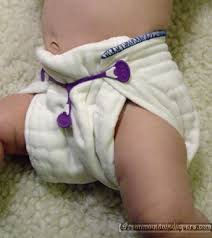
Prefolds / Fitted / Flats / Inserts / Boosters / Pads are all absorbency layers.


Covers are the waterproof layer.


Other terms like "pocket" or "all in 2" or "all in 1" are terms to describe how you would use that cloth diaper product to get those two layers secured against your baby's bum. Some brands have button snaps to secure the absorbancy layers together to the water proof outer layer. There are lots of styles and materials for absorbency that vary on a scale from holds a lot of liquid to quickly soaks up liquid. Similarly for the waterproof covers, there are a lot of styles on how to secure a cloth diaper (snaps and "hook and loop" ie velcro)
I hope my quick explanation helps demystify the basics of what a cloth diaper is for you.
Washing cloth diapers for newborns vs babies
Newborns infants go through a LOT of diapers. And the good news about cloth diapering is that as long as your baby isn't eating solids, all of the waste is water soluble and can all just go directly in the wash. Once your baby starts eating solids though, those solids cannot go in the washing machine and need to be flushed down the toilet. Washing typically involves 2 cycles, one on cold to remove all the waste and urine, and another on hot with detergent to sanitize.
Solid Waste
There's lots of methods people use to flush solids. There's the very hands on (but requires no tools) "dunk and swirl" where you invert the cloth diaper, dunk it in the toilet, swirl and shake to get the solid waste off. There is also the spatula method which involves a cheap spatula to scrap solids into the toilet to flush. And last, there's the sprayer method which involves a spray attachment to the toilet (very easy to install), and usually a spray pail shield guard so that the splash zone stays in the toilet. While researching cloth diapers, I learned that human waste isn't supposed to go in the trash! This fact actually got my partner on board with doing cloth diapers.
Extra Cloth Diaper Accessories & extra terms
Snappi - this replaces the safety pin fastener from the old school cloth diaper to be able to secure a prefold or flat diaper absorbancy layer around a baby. they are a little strechy plastic T with gripping teeth at the ends to grab fabric
Wet Bags - You need somewhere to store your soild diapers before you wash them. these come in larger hamper sizes, or smaller travel ones (for your diaper bag)
Cloth Wipes - Exactly what they sound like, a wipe cloth that you use post diaper change to dry off your baby's bum. A gentle dry wipe is also really useful in preventing diaper rash.
Liners - There are a couple kinds. Reusable ones are often just strips of fleece cut in a rectangle, and there are bioliners that may say "flushable" (but really do NOT flush this, they are not sceptic safe, and they also are bad for the local water waste management) that are dispoable. You use liners when you need to apply diaper cream (because diaper cream will also prevent your diaper from absorbing liquid if it builds upon the fabric), or as a more convenient way to be able to flush poop once your baby starts solids.
"Stripping" your diapers - regular laundry detergent can actually build up on cloth and prevent it from being absorbant (this happens to towels that go into laundry too). The act of "Stripping" your diapers is running it through a special kind of laundry load to remove this build up so your diapers won't leak out liquid. The typical brand used for this is mighty bubbles.
Local Cloth Diaper Resources & Services
DiaperLab - laundering service & shop in Davis Square, they also run a cloth diapers 101 class in person and virtual. They are sadly shutting down their business at the end of March 2026.
KindByNature - laundering service based in western mass, but may have some local customers. will need to bring your own covers
Changing Habits - laundering service based in western mass, that also covers Arlington. will need to bring your own covers
If you know of any other resources, comment below and I'll add it.
Some personal reflections
I was a fence-sitter about children for a long time. After deciding to take the plunge, and then having a very long, arduous fertility journey, I had a lot of time to think about (read: was constantly trying to hedge my bets so as not to be disappointed if i couldn't have kids) how I wanted to bring another life onto this planet. One of the first things that struck me as a thing I wanted to try was cloth diapering.
When I started researching, here were my reasons why:
definitely better for the planet?
cheaper than disposables?
less diaper rash?
easier potty training?
Well, as it turns out, the jury is still out if it's better for the planet. There's still a debate on its water usage and production of cloth vs production and landfill disposables, but certainly keeping human waste out of municipal garbage disposal is a good thing for public health and safety. I also found it interesting to know that the municipal waste management in our region burns most of its trash (and the rest goes to landfill). There is no doubt that running your dryer has a huge electrical impact (though most cloth diaper experts suggest using sunshine's UV to get stains out).
Honestly, parenting has been hard enough, and when we had the norovirus, you bet I just used disposables for a week. Cloth diapering in addition to being water intensive is just more time intensive too, and you can get into a groove of having it be part of your regular laundering for all those outfit, bib, and blow out changes, but it's not a choice I'd make for everyone.
So far my experience has been fine, and after my partner learned that it was better for waste management (for smells and frequency of taking out trash) to flush solid waste on disposables, he happily resigned himself to the cloth diapering journey with me. At this point, we've successfully cloth diapered with our first child, and we're starting again with our second baby. We haven't run out of steam yet, so here's hoping we continue our cloth diapering journey.


Comments